
TL;DR:
- Continuing education for BCBAs ensures they maintain ethical and effective practice while advancing their knowledge.
- The BACB requires 32 CEUs every two years, including ethics and supervision credits, with new assessment rules effective in 2026.
Continuing education for BCBAs is the structured process of acquiring required knowledge and skills to maintain certification and ensure ethical, effective practice in behavioral analysis. The Behavior Analyst Certification Board (BACB) mandates 32 CEUs every two years for all certified behavior analysts, with specific hours dedicated to ethics and supervision. These continuing education units (CEUs) are not optional credits. They are the foundation of professional competence, ethical accountability, and client safety in applied behavior analysis (ABA). Understanding why continuing education BCBA matters goes well beyond checking a compliance box. It shapes the quality of care every client receives and the trajectory of your career.
What are the current BCBA continuing education requirements?
The BACB requires BCBAs to complete 32 total CEUs within each two-year recertification cycle. Of those, 4 CEUs must cover ethics, focusing on professional conduct, ethical decision-making, and applying the BACB Ethics Code in real-world practice. BCBAs who supervise trainees or Registered Behavior Technicians (RBTs) must also complete 3 supervision CEUs, which build skills in performance feedback, evaluation, and ethical supervisory practices.
A significant regulatory update took effect july 1, 2026. Since that date, all asynchronous CEU activities must include at least three knowledge-check questions per CEU credit to count toward renewal. This change raises the bar for online course quality and makes provider selection more critical than before.
| CEU Category | Hours Required | Notes |
|---|---|---|
| Ethics | 4 CEUs | Covers BACB Ethics Code application |
| Supervision | 3 CEUs | Required only for those supervising RBTs or trainees |
| General ABA content | 25 CEUs | Any BACB-approved topic area |
| Total | 32 CEUs | Completed within a two-year cycle |
Your recertification cycle start date is personalized to your last renewal date. That detail matters more than most BCBAs realize. The BACB official portal is the only authoritative source for tracking your progress. Third-party trackers use generic calendar dates that may not align with your individual cycle, which creates a real risk of certification lapses.
Pro Tip: Log into your BACB Gateway account at least once per quarter to verify your CEU count and confirm your cycle end date. Do not rely on course platform dashboards or employer HR systems as your primary record.
Why does continuing education matter beyond just meeting requirements?
Ongoing professional development through CEUs keeps BCBAs current with evidence-based practices and clinical methodologies. ABA research evolves continuously. New functional analysis procedures, updated verbal behavior frameworks, and refined naturalistic teaching strategies emerge regularly. A BCBA who completed training five years ago and stopped learning is practicing with an outdated clinical toolkit.
Ethics CEUs carry particular weight. They reduce the risk of BACB Ethics Code violations by keeping practitioners sharp on boundary issues, informed consent, and data integrity. A single ethics violation can end a career. Regular ethics training is the most practical form of professional protection available.
Ongoing education is not just about keeping your credential active. It is about ensuring that every client you serve receives care grounded in the best available science and the highest ethical standards. BCBAs who treat CEUs as genuine learning opportunities consistently deliver stronger clinical outcomes than those who treat them as paperwork.
The career benefits of CEU investment are equally concrete. Employers increasingly view active professional development as a key indicator of clinician value. BCBAs who pursue specialized CEUs in areas like organizational behavior management, pediatric feeding disorders, or trauma-informed ABA position themselves for clinical leadership roles. Continuing education signals to employers and clients alike that you take your practice seriously.
Supervision CEUs deserve special attention. They sharpen skills in delivering performance feedback, structuring competency evaluations, and navigating the ethical complexities of supervisory relationships. BCBAs who supervise RBTs or trainees carry direct responsibility for the quality of care those supervisees deliver. Strong supervision skills multiply your positive impact across an entire caseload.

How can BCBAs strategically plan their CEUs to maximize value?
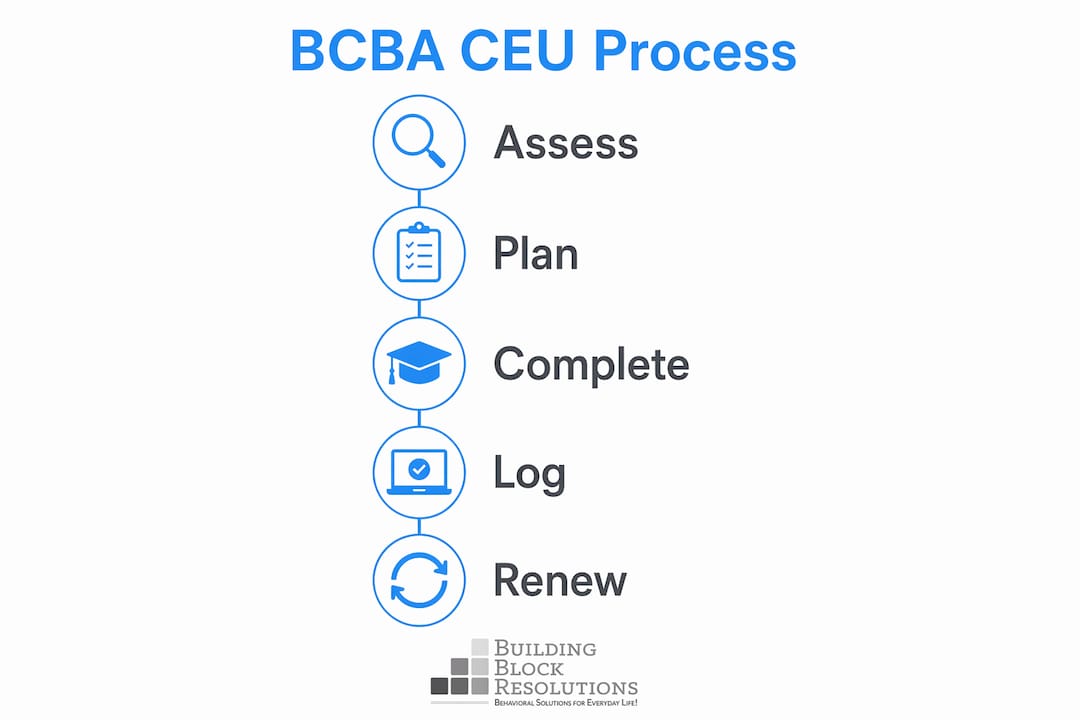
Strategic CEU planning separates BCBAs who thrive professionally from those who scramble at renewal time. The most effective approach treats CEUs as ongoing professional practice rather than a last-minute compliance task. Spreading your 32 CEUs evenly across a two-year cycle works out to roughly one hour of learning per month. That pace is sustainable and produces better knowledge retention than cramming 20 hours into the final two months of your cycle.
A practical planning sequence looks like this:
- Complete ethics CEUs in the first six months. Ethics training grounds your clinical decision-making from the start of the cycle. Completing these early also eliminates the risk of forgetting a mandatory category.
- Finish supervision CEUs by month nine. If you supervise RBTs or trainees, address this requirement early. Supervision skills apply immediately to your daily work, so the learning pays off right away.
- Identify your clinical gaps and choose general CEUs accordingly. Selecting courses aligned with your current practice challenges produces real growth. A BCBA working primarily with adolescents with autism and co-occurring anxiety benefits far more from a trauma-informed ABA course than from a generic introductory module.
- Verify ACE provider status before enrolling. Since july 2026, asynchronous courses without embedded knowledge-check assessments do not count toward renewal, regardless of any certificate issued. Confirm that your chosen provider holds current Authorized Continuing Education (ACE) status with the BACB.
- Keep personal documentation for at least 7 years. The BACB conducts audits that can occur long after a renewal cycle closes. Storing your CEU certificates securely for a minimum of seven years protects you if your records are ever questioned.
Pro Tip: Build a simple spreadsheet that logs each CEU by date, provider name, ACE approval number, category (ethics, supervision, or general), and certificate file location. This takes five minutes per course and makes any BACB audit straightforward.
Connecting with peers through your BCBA professional network also surfaces high-quality CEU recommendations. Colleagues in niche practice areas often know which courses deliver genuine clinical value versus which ones are superficial.
What are the common challenges and misconceptions about BCBA continuing education?
Several recurring mistakes put BCBAs at risk of certification lapses or incomplete recertification cycles. Recognizing these pitfalls early protects your credential and your career.
- Relying on third-party CEU trackers. Because each BCBA’s recertification cycle is tied to their individual renewal date, generic tracking apps and employer HR platforms frequently show incorrect totals. The BACB Gateway is the only reliable source of truth.
- Assuming pre-2026 asynchronous courses still count. CEUs earned from asynchronous courses that lack the required embedded assessments do not count toward renewal after july 1, 2026. Certificates issued by non-compliant providers carry no weight with the BACB, regardless of how the course was marketed.
- Delaying CEU completion until the final months. Compressing CEUs near deadlines increases the risk of incomplete recertification and reduces knowledge retention. BCBAs who rush through courses absorb less and benefit less from the content.
- Underestimating the ethics and supervision requirements. Some BCBAs treat these mandatory categories as minor details and address them last. Forgetting even one required category means the full 32 CEUs do not satisfy renewal criteria.
- Skipping documentation. Assuming the BACB or your course provider will maintain your records indefinitely is a costly mistake. Personal documentation is your responsibility, and gaps in your records during an audit can result in serious consequences.
The BCBA certification requirements checklist at Buildingblockresolutions provides a practical reference for staying organized across your full recertification cycle.
Key Takeaways
Continuing education for BCBAs is a mandatory, structured process that protects certification, sharpens clinical skills, and directly improves the quality of care delivered to clients.
| Point | Details |
|---|---|
| 32 CEUs every two years | Complete 4 ethics, 3 supervision (if applicable), and 25 general CEUs per cycle. |
| 2026 asynchronous rule | All online courses must include at least 3 knowledge-check questions per CEU to count. |
| BACB Gateway is authoritative | Track your CEU progress only through the official BACB portal, not third-party apps. |
| Spread learning evenly | Completing roughly 1 CEU per month reduces renewal stress and improves retention. |
| Document for 7 years | Keep all CEU certificates for a minimum of 7 years to prepare for potential BACB audits. |
Why I think BCBAs should reframe how they see CEUs
Most BCBAs I know started their careers genuinely excited about learning. Then recertification cycles arrived, and CEUs quietly became something to get through rather than something to gain from. That shift is understandable, but it costs practitioners more than they realize.
The BCBAs who grow fastest professionally are the ones who treat each CEU as a deliberate investment in a specific skill or knowledge gap. I have seen clinicians transform their entire approach to verbal behavior after one well-chosen course. I have also seen experienced practitioners coast through generic modules and wonder why their clinical results plateau. The difference is not talent. It is intentionality.
The 2026 knowledge-check requirement is actually good news, even if it feels like added friction. It forces course providers to build content that requires genuine engagement. That means the CEUs you earn from now on carry more clinical weight than many of the passive video courses that counted before. The professional development resources available to ABA practitioners today are stronger than they have ever been. Use them with purpose.
— Jennifer
Buildingblockresolutions supports your growth as a behavior analyst
Buildingblockresolutions has spent over 20 years working at the intersection of rigorous ABA practice and compassionate client care. That experience shapes everything the team produces for practitioners and families alike.

Whether you are navigating recertification requirements, looking to deepen your clinical skills, or seeking guidance on ABA therapy and collaboration, Buildingblockresolutions offers resources grounded in real practice. The team understands what it takes to maintain high standards across a full caseload while meeting every BACB requirement. Explore the Buildingblockresolutions services list to find the support that fits where you are in your career right now.
FAQ
How many CEUs does a BCBA need every two years?
BCBAs must complete 32 CEUs per two-year cycle, including 4 ethics CEUs and 3 supervision CEUs for those who supervise trainees or RBTs.
What changed about BCBA CEU requirements in 2026?
Since july 1, 2026, all asynchronous CEU courses must include at least three embedded knowledge-check questions per CEU credit. Courses without these assessments do not count toward BCBA renewal.
Can I use any online course for BCBA continuing education?
Only courses from BACB-approved Authorized Continuing Education (ACE) providers count toward renewal. Verifying ACE status before enrolling is required, especially for asynchronous courses under the 2026 assessment rule.
How long should I keep my CEU certificates?
Keep all CEU certificates for a minimum of 7 years. BACB audits can occur after renewal cycles close, and personal documentation is your responsibility.
Why do ethics CEUs matter so much for BCBAs?
Ethics CEUs keep practitioners current on the BACB Ethics Code, professional boundaries, and informed consent. Regular ethics training is the most direct way to reduce the risk of violations that can result in credential suspension or revocation.
0 Comments