Choosing an ABA therapy provider means selecting a clinical team that delivers individualized, ethical, and transparent Applied Behavior Analysis care built around your child’s specific strengths and challenges. ABA therapy is the most extensively researched intervention for autism spectrum disorder, and the quality of your provider directly shapes how much progress your child makes. The difference between a strong provider and a mediocre one is not always visible on a website. It shows up in how a BCBA designs your child’s program, how staff respond when goals are not being met, and whether your family is treated as a partner or an afterthought.
How to choose an ABA therapy provider that fits your child
The foundation of any quality ABA program is BCBA clinical leadership. A Board Certified Behavior Analyst holds a graduate-level degree, passes a rigorous national exam administered by the Behavior Analyst Certification Board (BACB), and is trained to design, supervise, and modify individualized treatment plans. When you contact a provider, your first question should be direct: who designs and oversees my child’s program, and what are their credentials?
Many families assume a BCBA is involved simply because one is listed on staff. The reality is more nuanced. BCBA involvement should extend well beyond administrative duties. Your child’s BCBA should conduct the initial assessment, write the treatment plan, supervise direct therapy sessions, and meet with your family regularly to review progress. If a provider cannot tell you how often the BCBA directly observes therapy or meets with parents, that is a warning sign.

The staff delivering your child’s day-to-day therapy are typically Registered Behavior Technicians (RBTs). RBTs complete a 40-hour training program and work under BCBA supervision. BCBAs and RBTs serve distinct roles: BCBAs design and supervise, while RBTs implement the program directly with your child. A program that relies heavily on RBTs without active, hands-on BCBA oversight delivers inconsistent care, regardless of how polished the intake process feels.
Remote BCBA supervision is permitted under specific BACB ethical guidelines, but only when it involves meaningful observation and client awareness. If a provider offers telehealth-based supervision, ask exactly how the BCBA observes sessions and how often they review data in real time.
- Ask how many clients each BCBA supervises simultaneously.
- Confirm whether the BCBA conducts direct observations or relies solely on RBT reports.
- Request the frequency of BCBA-led parent meetings.
- Clarify whether the BCBA or an administrator handles your questions about treatment decisions.
Pro Tip: Ask the provider to describe a recent example of when a BCBA changed a child’s treatment plan based on data. A confident, specific answer tells you more than any brochure.
Does the treatment plan reflect your child’s individual needs?
Quality ABA programs build individualized plans from comprehensive assessments rather than following a standardized curriculum. This distinction matters enormously. A provider that hands every new client a similar set of goals is not practicing individualized ABA. They are running a production model that may look efficient but rarely produces the outcomes your child deserves.
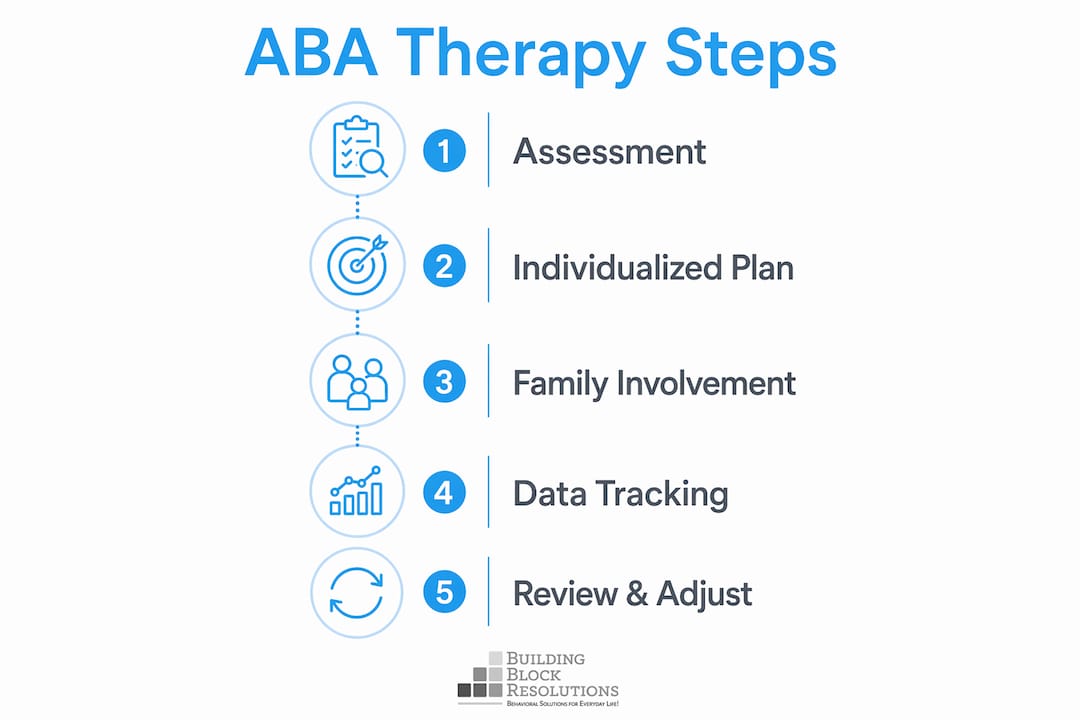
Before therapy begins, a thorough assessment should examine your child’s communication skills, adaptive behavior, social interaction, play skills, and any challenging behaviors. Tools like the ABLLS-R (Assessment of Basic Language and Learning Skills) or the VB-MAPP (Verbal Behavior Milestones Assessment and Placement Program) are commonly used by qualified BCBAs to establish a detailed baseline. The results of this assessment should directly drive every goal in the treatment plan.
Here is how to compare providers on individualization:
- Ask whether the initial assessment is conducted by the BCBA who will oversee your child’s program or by a separate intake team.
- Request to see a sample treatment plan and confirm it references specific assessment data, not generic developmental milestones.
- Ask how therapy hours are determined. Hours should reflect your child’s assessed needs, not a company-wide default package.
- Ask what happens when a goal is not being met after a defined period. A strong provider revises strategies based on data, not just continues collecting it.
| Provider practice | What it signals |
|---|---|
| Assessment completed by the supervising BCBA | Strong clinical ownership of the program |
| Hours based on individual assessment findings | Commitment to personalized care |
| Goals tied directly to assessment results | Genuine individualization, not a template |
| Clear protocol for revising unmet goals | Data-driven, responsive clinical practice |
| Standardized curriculum for all new clients | Possible one-size-fits-all approach |
Coordinating ABA goals with your child’s school Individualized Education Program (IEP) or 504 plan is another marker of quality. Provider-school coordination avoids duplicated efforts and supports skill generalization across settings. Ask directly whether the provider communicates with your child’s school team and how that process works.
Why family involvement defines therapy outcomes
Family involvement is a key predictor of successful ABA therapy outcomes. Skills learned in a clinic or therapy room only become lasting when they transfer to home, school, and community settings. That transfer depends on caregivers who understand the strategies being used and apply them consistently. A provider who does not actively train and involve your family is leaving the most powerful variable in your child’s progress untapped.
Strong providers build parent and caregiver training into the program from the start, not as an optional add-on. This training should cover the specific techniques your child’s BCBA is using, how to respond to challenging behaviors at home, and how to create opportunities for your child to practice new skills throughout the day. Providers who offer telehealth family coaching make this training more accessible for families with demanding schedules.
Look for these qualities when evaluating family involvement:
- The provider invites you to observe therapy sessions, either in person or via video.
- Parent training sessions are scheduled regularly and led by the BCBA, not delegated entirely to RBTs.
- You are included in goal-setting meetings and asked about your priorities for your child.
- The provider asks about your child’s behavior at home and adjusts goals accordingly.
Red flags are equally telling. Providers who discourage parent observation, limit your access to session data, or treat family questions as interruptions are signaling a closed system. Reputable ABA providers welcome transparency because they know it strengthens outcomes.
Pro Tip: Before signing any service agreement, ask whether you can observe a session during the first month of therapy. A provider who hesitates or adds conditions to that request deserves a follow-up conversation.
How quality providers track and report your child’s progress
Data collection is the backbone of ABA therapy. Every session should generate measurable data on your child’s performance across targeted skills. That data is not just a record-keeping exercise. It is the mechanism by which a skilled BCBA determines whether the current approach is working or needs to change.
Ask any provider you are evaluating how often they share progress reports with families and what those reports include. Monthly written reports are a reasonable minimum, but the best providers also hold regular review meetings where the BCBA walks you through the data and explains what it means for your child’s program. Data should drive goal updates when progress is slower than expected. A provider who shows you graphs but cannot explain what clinical decisions those graphs prompted is not using data the way ABA requires.
Ask these questions to gauge a provider’s responsiveness:
- How do you define “expected progress,” and over what time period?
- What is your process when a child is not meeting a target after several weeks?
- Can I request an unscheduled meeting with the BCBA if I have concerns between review periods?
- How do you communicate urgent changes in my child’s behavior or program?
High staff turnover and undertrained technicians undermine treatment consistency, which is one of the most damaging but least discussed risks in ABA. Consistency matters because ABA relies on repeated, predictable learning trials. Ask providers directly about their staff retention rates and how they handle transitions when a therapist leaves.
Key takeaways
Choosing the right ABA therapy provider requires evaluating BCBA involvement, individualized programming, family training, and transparent progress reporting before committing to any program.
| Point | Details |
|---|---|
| BCBA clinical leadership | Confirm the BCBA designs, supervises, and regularly reviews your child’s program directly. |
| Individualized assessment | Treatment goals must come from your child’s specific assessment data, not a preset curriculum. |
| Family training included | Parent coaching should be a built-in program component, not an optional extra. |
| Transparent progress reporting | Expect regular BCBA-led reviews that explain what data means and what changes it drives. |
| Staff stability matters | Ask about therapist retention and supervision practices before enrolling your child. |
What I’ve learned about trusting your instincts in provider selection
After years of working in and around ABA therapy, the single most consistent pattern I have observed is this: the families who get the best outcomes are the ones who asked hard questions early and did not accept vague answers. They treated the provider interview as a two-way evaluation, not an intake formality.
The relationship between a family and an ABA provider is not a passive service transaction. It is a clinical partnership. When that partnership works, the BCBA knows your child’s personality, your family’s priorities, and the specific contexts where skills need to generalize. When it does not work, even technically competent therapy produces limited results because the program is disconnected from your child’s real life.
One thing most articles do not say clearly enough: you are allowed to change providers. If you are three months into a program and the BCBA has met with you once, your questions are being routed to an administrative coordinator, and you cannot explain what your child is working on or why, that is not a relationship worth preserving. Your child’s progress window is real, and spending months in a misaligned program has a cost.
Prepare for your first provider interview the way you would prepare for any important meeting. Write down your child’s three most pressing challenges. Know what your school team is currently working on. Ask the provider how their program would address those specific challenges. The quality of their answer will tell you more than any credential on the wall.
I also encourage parents to look beyond the intake coordinator and speak directly with the BCBA who would lead their child’s program. That conversation, even a brief one, reveals the clinical culture of the organization. You want someone who is curious about your child, not someone reading from a script.
— Jennifer
How Buildingblockresolutions supports your provider search
Buildingblockresolutions brings over 20 years of ABA expertise to families navigating exactly this decision. Their programs are built on individualized treatment plans, active BCBA oversight, and parent coaching that extends the impact of therapy into everyday life. Over 90% of children in their programs achieve significant skill advancements, a result that reflects genuine clinical commitment rather than marketing language.

If you are working through the process of finding quality ABA therapists and want a team that treats your family as a true partner, Buildingblockresolutions offers both in-person and telehealth ABA services designed to meet your child where they are. You can also explore their ABA collaboration resources to understand what a transparent, family-centered program looks like in practice. Reach out to start a conversation about your child’s specific needs.
FAQ
Who should design my child’s ABA therapy program?
A Board Certified Behavior Analyst (BCBA) should design and oversee your child’s ABA program. BCBAs hold graduate-level credentials and are trained to create individualized treatment plans based on formal assessment data.
What are red flags when evaluating ABA providers?
Red flags include providers who discourage parent observation, guarantee specific outcomes, or cannot explain how they revise goals when progress stalls. Reputable providers prioritize transparency and active family involvement.
How many hours of ABA therapy does my child need?
Therapy hours should be determined by your child’s individual assessment findings, not a company-wide default. Ask each provider how they calculate recommended hours and whether that recommendation is reviewed as your child progresses.
How do I know if a provider is actually using data to guide therapy?
Ask the BCBA to describe a recent case where data led to a specific change in a child’s treatment plan. Providers who revise targets based on data, rather than simply collecting it, demonstrate genuine evidence-based practice.
Should ABA therapy goals connect to my child’s school IEP?
Yes. Coordinating ABA goals with your child’s IEP or 504 plan avoids redundant objectives and supports skill transfer across settings. Ask any provider you are considering how they communicate with your child’s school team.
0 Comments