
TL;DR:
- Autism training improves educator knowledge, confidence, and student outcomes in inclusive classroom settings. Structured programs with coaching and goal alignment produce the most effective and lasting results, supported by federal and state requirements. Ongoing, evidence-based professional development fosters more equitable education for autistic students and reduces teacher burnout.
Why autism training matters for educators
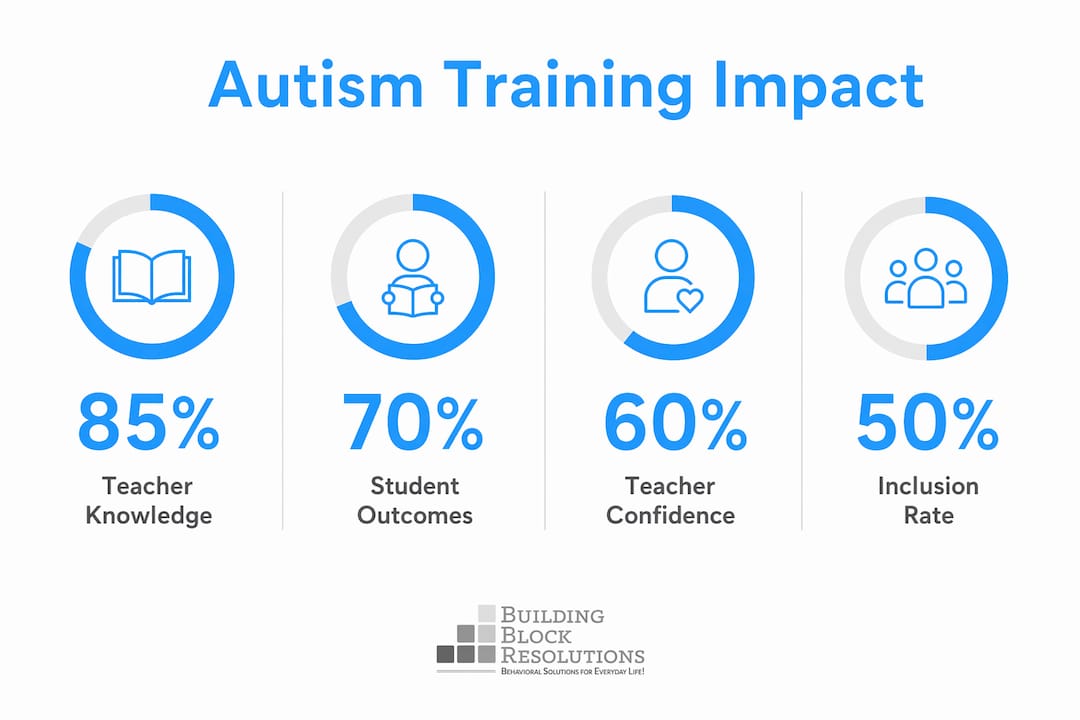
Autism training is one of the most direct investments a school can make in both teacher effectiveness and student outcomes. A systematic review of 23 studies found that training produced statistically significant improvements in perceived knowledge in 84.62% of studies, objective knowledge in 90%, and acceptance in 80%. Those numbers reflect something concrete: educators who receive structured training walk into classrooms genuinely better prepared to support autistic students.
The connection between training and classroom practice is not automatic, though. Research consistently shows that facilitated, interactive training produces far better results than self-directed study. When training includes coaching, autistic individual input, and hands-on skill-building, educators translate what they learn into real instructional changes. Without those elements, knowledge gains tend to stay theoretical.
Federal law reinforces this. Under the Individuals with Disabilities Education Act (IDEA), states must ensure special education personnel are appropriately prepared and trained, with professional development that is sustained, intensive, and classroom-focused. Autism training is not optional preparation. For many educators, it is a compliance requirement and a professional responsibility.
What measurable benefits does autism professional development deliver?
The benefits of autism professional development extend well beyond a teacher feeling more informed. Systematic reviews of PD focused on autistic students show that well-designed programs increase teacher capacity, skills, and confidence, which in turn supports more equitable instruction in inclusive settings.
Student outcomes improve alongside teacher growth. Studies within the systematic review reported that autistic students developed stronger writing abilities, improved emotion recognition, and greater independence when their teachers participated in structured professional development. Teachers’ participation also led to better attainment of individualized learning goals and higher participation in co-taught classrooms.
A randomized controlled trial of 60 elementary schools testing the National Professional Development Center on Autism Spectrum Disorder (NPDC) model found that teachers in NPDC classrooms reported significantly higher numbers of evidence-based practices (EBPs) used, greater confidence in applying those practices, and meaningful increases in student goal attainment compared to schools using standard approaches. That trial involved 486 participants, making it one of the most rigorous studies on educator autism training to date.
Pro Tip: When evaluating a professional development program, ask whether it reports student outcome data, not just teacher satisfaction scores. Programs that track both give you a clearer picture of real impact.
What makes an autism training program actually effective?
Not all training programs deliver equal results. The features that separate effective programs from ineffective ones are well-documented in the research.
Active, facilitated learning consistently outperforms passive content delivery. Educators who engage in skill practice, receive feedback, and apply techniques in real classroom contexts retain and use what they learn. Including autistic voices in program design and delivery also strengthens relevance and acceptance, a finding that the systematic review thematic synthesis highlighted as a valued but underused feature.
Coaching is the element most programs underestimate. The NPDC model structures coaching around a clear loop: educators set observable student goals, select EBPs matched to those goals, implement with fidelity, and receive performance feedback from a coach. The NPDC coaching manual describes this as a sustained, outcome-based process that moves through exploration, installation, and full implementation over a school year. Fidelity data from the NPDC trial showed that teachers needed an average of 3–5 coaching sessions before reaching consistent implementation, with some requiring additional support.
Goal-oriented training tied directly to each student’s Individualized Education Program (IEP) goals produces the strongest outcomes. When educators can see a clear line from their training to a specific child’s progress, motivation and fidelity both increase. You can explore practical classroom behavior strategies that align with this goal-driven approach.
What do US law and state requirements say about autism training?
IDEA Part B sets the federal floor. Under Section 612(a)(14) and OSEP Memorandum 22-01, state educational agencies must establish qualifications ensuring that special education personnel have the content knowledge and skills to serve children with disabilities. Educators pursuing alternate certification routes must receive professional development that is sustained, intensive, and classroom-focused before and while teaching, alongside structured supervision.
States build on that floor with their own requirements. New York is a clear example: individuals applying for special education certificates in areas including Students With Disabilities, Deaf and Hard of Hearing, Blind and Visually Impaired, and Speech and Language Disabilities must complete autism-specific coursework or training from an approved provider. That requirement applies to applications submitted after September 1, 2009, and the state maintains an official list of approved training providers.
Districts that invest in compliant, evidence-based training programs protect themselves legally while also serving students more effectively. Defensible practice means documented, research-backed instruction, not just good intentions. Understanding how IEP and 504 plans interact with educator training requirements helps administrators build coherent support systems for autistic students.
How does autism training build teacher confidence and support inclusion?
Teacher self-efficacy is the mechanism that connects training to lasting classroom change. A study published through ERIC found that professional development had a large, statistically significant positive effect on general education teachers’ self-efficacy ratings when working with autistic students in inclusion classrooms. That effect size matters because self-efficacy predicts behavior: teachers who believe they can support autistic students actually do.

Low self-efficacy, by contrast, creates a cycle that harms students. Teachers who feel unprepared tend to avoid implementing unfamiliar strategies, which reduces the quality of instruction autistic students receive. Research shows that insufficient training leads directly to teachers reporting they feel ill-equipped, and that feeling translates into lower instructional quality in inclusion settings.
Increased confidence also reduces burnout. When educators have practical tools and know how to use them, challenging classroom moments become manageable rather than overwhelming. Professional development that builds self-efficacy is not just good for teachers. It is protective for the students who depend on those teachers every day.
How Buildingblockresolutions supports educator autism training
Buildingblockresolutions brings more than 20 years of Applied Behavior Analysis (ABA) expertise to the work of supporting educators and the children they serve. The organization’s approach is grounded in the experimental analysis of behavior, meaning every training and intervention strategy is tied to evidence, not convention.
For educators, Buildingblockresolutions offers preparation and training programs designed to build genuine implementation capacity, not just awareness. The focus is on high-fidelity delivery of EBPs, coaching that mirrors the NPDC model’s structured feedback process, and individualized goal-setting connected directly to each student’s needs. Parent coaching is integrated throughout, creating consistency between classroom and home environments. Explore the full range of educator training services to see how these programs are structured.
What happens when educators lack autism training?
The consequences of inadequate training are well-documented and direct. Teachers without autism-specific preparation consistently report feeling unprepared to support autistic students, and that unpreparedness shows up in the classroom. Research confirms that teachers’ knowledge of ASD is generally poor across education stages, with mainstream teachers showing the lowest levels.
Without training, inclusion becomes a physical arrangement rather than a genuinely supportive learning environment. Autistic students may be present in general education classrooms but receive instruction that does not account for their communication styles, sensory needs, or learning differences. Behavior challenges escalate when educators lack strategies to address them proactively, and both teacher and student wellbeing suffer.
Long-term effects of autism training on classroom inclusion and equity
The long-term picture is encouraging when training is sustained and well-designed. Professional development improves both teacher competence and confidence, and those gains translate into more equitable instruction over time. Schools where educators receive ongoing training build cultures of inclusion rather than treating autism support as an individual teacher’s problem to solve alone.
Equity is the deeper goal. Autistic students educated by trained teachers are more likely to participate meaningfully in co-taught classrooms, achieve their IEP goals, and develop the social and academic skills they need. The NPDC randomized trial demonstrated that structured professional development did not disrupt the developmental progression of autistic students and produced positive goal attainment outcomes. That evidence supports a straightforward conclusion: sustained, coaching-supported training is the infrastructure that makes inclusive education real.
Buildingblockresolutions is here to help educators and families build that foundation together. Whether you are a teacher seeking professional development resources or a parent looking to understand how ABA therapy supports your child’s school experience, the team brings the expertise and care to guide you forward.
Explore ABA therapy explained to see how evidence-based practices connect classroom training with meaningful outcomes for children with autism.
Key Takeaways
Autism training produces measurable improvements in teacher knowledge, confidence, and student outcomes, making it one of the highest-return investments a school district can make.
| Point | Details |
|---|---|
| Training improves knowledge significantly | Studies show autism training produced significant improvements in perceived knowledge by 84.62%, objective knowledge by 90%, and acceptance by 80%. |
| Coaching drives fidelity | NPDC data shows teachers typically need 3–5 coaching sessions to reach consistent EBP implementation. |
| Self-efficacy is the key mechanism | Professional development has a large, statistically significant positive effect on teacher self-efficacy ratings. |
| Federal law requires it | IDEA Part B mandates sustained, intensive, classroom-focused professional development for special education personnel. |
| Student outcomes improve directly | Trained educators produce gains in autistic students’ goal attainment, independence, and classroom participation. |
FAQ
Why does autism training matter for general education teachers?
General education teachers are often the primary educators for autistic students in inclusion classrooms, yet research shows their ASD knowledge is generally poor without targeted training. Professional development gives them the skills and confidence to provide genuinely inclusive instruction.
What does IDEA require regarding autism training for educators?
Under IDEA Part B and OSEP Memorandum 22-01, states must ensure special education personnel receive sustained, intensive, and classroom-focused professional development that builds the content knowledge needed to serve students with disabilities.
How does the NPDC model improve educator practice?
The National Professional Development Center on Autism Spectrum Disorder (NPDC) model combines goal-setting, EBP selection, and structured coaching with fidelity monitoring. A randomized controlled trial found it significantly increased teachers’ EBP use and autistic students’ goal attainment compared to standard approaches.
Does autism training reduce teacher burnout?
Yes. Research shows that building teacher self-efficacy through professional development reduces burnout and anxiety, because educators with practical strategies feel equipped rather than overwhelmed when supporting autistic students.
Are there state-level autism training requirements for educators?
Yes. New York, for example, requires individuals applying for certain special education certificates to complete autism-specific coursework or training from a state-approved provider, with requirements in place for applications submitted after September 1, 2009.
0 Comments