
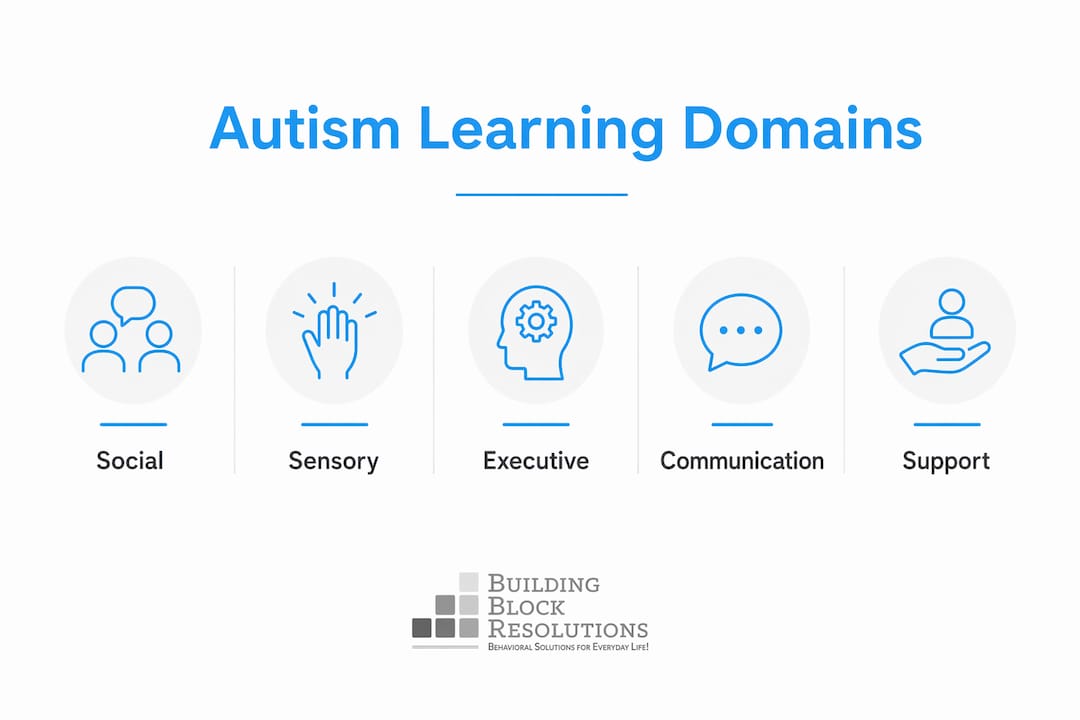
Autism spectrum disorder is a neurodevelopmental condition that shapes how students perceive, communicate, and engage with the world around them, including every corner of a classroom. The impact of autism on learning is not uniform. One student may struggle to filter out the hum of fluorescent lights while another finds multi-step verbal instructions nearly impossible to follow. What they share is a set of core differences in social interaction, communication, sensory processing, and executive functioning that, without the right support, can quietly erode confidence and academic progress.
Here is what educators, parents, and caregivers need to understand about how autism affects classroom learning:
- Social interaction: Reading peer cues, joining group work, and maintaining friendships are genuinely difficult, not a matter of effort or attitude.
- Communication: Pragmatic language deficits mean a student may understand individual words but miss the social meaning behind them.
- Sensory processing: Hypersensitivity to sounds, lights, or textures can make a standard classroom feel physically overwhelming.
- Executive functioning: Planning, shifting between tasks, and regulating emotions are areas where autistic students often show clinically significant gaps compared to neurotypical peers.
- Routine and change: Unexpected schedule changes can trigger distress that derails an entire school day.
Understanding these five dimensions is the foundation for every effective support strategy that follows.
How autism affects classroom learning through social and communication challenges
Social communication sits at the heart of classroom life, and it is one of the areas where autism creates the most visible friction. Autistic students often experience pragmatic language deficits, meaning they may speak fluently but still misread conversational intent, miss sarcasm, or respond in ways that seem off to peers. That gap between verbal ability and social fluency is frequently misread by teachers as rudeness or indifference.

Group work amplifies these challenges. Negotiating roles, reading body language, and tracking a fast-moving conversation all happen simultaneously in a small-group setting, and each of those tasks draws on skills that autistic students are actively working to develop. The result is often withdrawal, frustration, or behavior that looks disruptive but is really a response to being overwhelmed.
Following multi-step verbal instructions is another consistent pain point. When a teacher says, “Take out your notebook, turn to page 47, and answer questions one through five,” an autistic student may process only part of that sequence. Receptive language difficulties mean the message does not always land the way it was sent.
Federal law addresses this directly. The Individuals with Disabilities Education Act (IDEA) mandates that schools provide communication supports as part of a student’s individualized education program, ensuring that language barriers do not become permanent academic barriers. The CDC also notes that social communication difficulties are a defining feature of ASD, affecting how students interact with both peers and adults across every school setting.
Classroom implications at a glance:
- Difficulty interpreting nonverbal cues such as facial expressions and tone of voice
- Challenges initiating or sustaining peer conversations
- Tendency to interpret language literally, missing idioms or implied meaning
- Reduced participation in class discussions due to processing speed differences
- Struggles with turn-taking in both conversation and collaborative tasks
Sensory processing differences and how they disrupt learning in school
A classroom is, by design, a sensory-rich environment. Fluorescent lighting flickers. Chairs scrape. Thirty children breathe, shift, and whisper. For most students, the brain filters this background noise automatically. For many autistic students, it does not. Sensory hypersensitivity to sounds, lights, and textures can push a student into sensory overload, triggering shutdowns or behavioral responses that look, from the outside, like defiance.
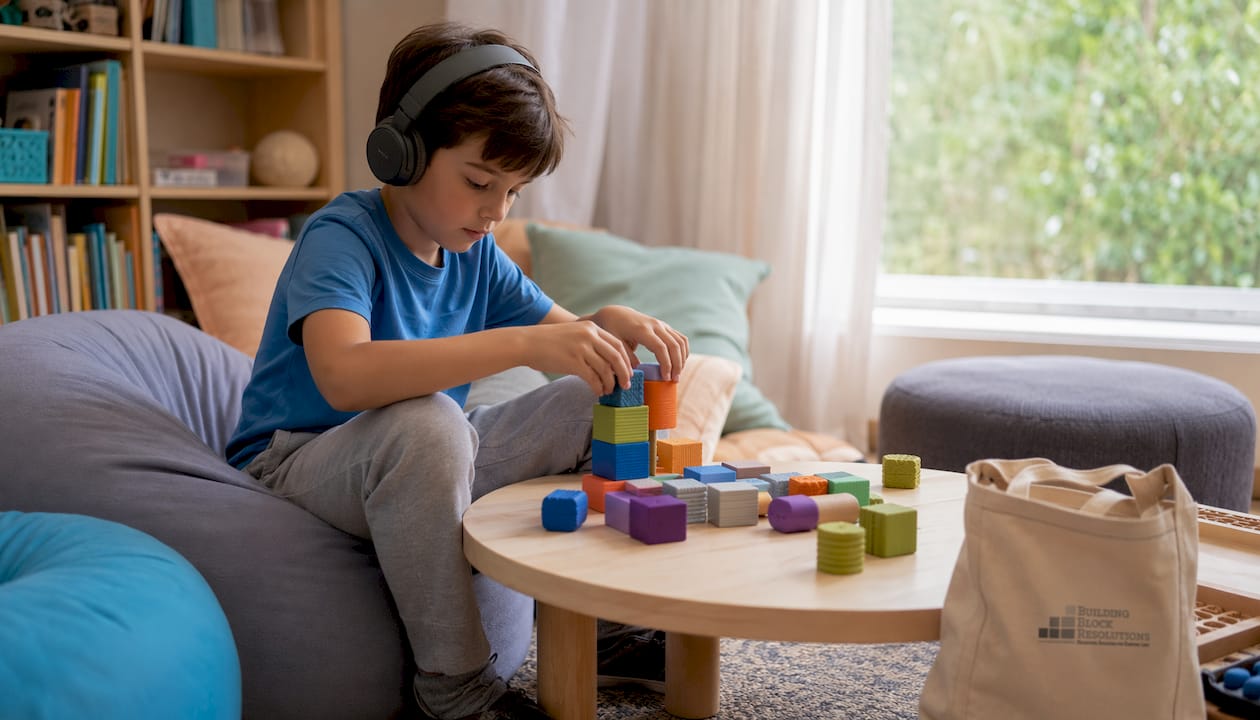
Hyposensitivity is the less-discussed side of the same coin. A student who is under-responsive to sensory input may seek out movement or touch in ways that disrupt the class, not because they are acting out, but because their nervous system is asking for more input to stay regulated.
The academic consequences are concrete. A student in sensory overload cannot attend to instruction, retain information, or participate in discussion. Over time, repeated overload experiences can create anxiety around school itself, compounding the original challenge. Sensory differences also affect social engagement: a child who avoids the cafeteria because of noise is also missing the informal peer interactions that build friendships.
Classroom environments that support neurodiverse learners take sensory needs seriously, treating them as a legitimate part of educational planning rather than a behavioral problem to manage.
Common sensory triggers in school settings:
- Overhead fluorescent lighting (flickering or brightness)
- Unexpected loud sounds such as bells, announcements, or fire drills
- Crowded hallways and cafeterias
- Certain fabric textures in clothing or seating materials
- Strong smells from cleaning products, food, or markers
Executive functioning deficits and how they affect autistic students in school
Executive functioning is the brain’s management system: the set of skills that allows a person to plan, start a task, shift focus, monitor their own behavior, and regulate emotions. Research using the Behavior Rating Inventory of Executive Function (BRIEF-2) consistently shows that autistic students have clinically significant executive functioning deficits, with cognitive flexibility, or “Shift,” emerging as a peak area of impairment in both home and school settings.
What makes this particularly relevant for educators is that executive function impairments tend to be more pronounced in school than at home. The structured, high-demand nature of a classroom can either expose or intensify these gaps. A student who manages reasonably well in the predictable rhythms of home may fall apart when a substitute teacher changes the schedule or a group project requires rapid role-switching.
The downstream effects touch nearly every part of academic life. Difficulty with task initiation means a student stares at a blank page long after peers have started writing. Poor organizational skills lead to lost assignments and missed deadlines. Emotional regulation challenges can turn a minor frustration, like a broken pencil, into a full classroom disruption. These are not character flaws. They are neurological differences that respond well to targeted intervention.
One underappreciated finding: executive function challenges such as self-monitoring and emotional regulation are frequently underrepresented in IEPs, which means many students go without the targeted support these specific deficits require.
Executive functioning challenges commonly seen in classrooms:
- Difficulty transitioning between subjects or activities
- Trouble initiating tasks without direct adult prompting
- Poor working memory affecting multi-step assignments
- Emotional dysregulation in response to unexpected changes
- Inconsistent performance that confuses teachers unfamiliar with autism
Effective strategies and supports for autistic students in classroom settings
The good news is that the evidence base for supporting autistic students in school has grown substantially. The National Professional Development Center on Autism Spectrum Disorder has identified 27 evidence-based practices (EBPs) for improving outcomes for students with ASD, and federal law through IDEA requires their use. The challenge for most schools is not finding strategies but selecting and implementing them with enough fidelity to produce real results.
Individualized Education Programs and 504 Plans are the legal scaffolding that makes personalized support possible. An IEP documents a student’s current performance, sets measurable annual goals, and specifies the services and accommodations the school must provide. A 504 Plan covers students who need accommodations but do not qualify for special education services. Both tools are only as effective as the team that builds and monitors them.
Structured teaching approaches like TEACCH (Treatment and Education of Autistic and Related Communication-Handicapped Children) are built on the principle that autistic students thrive on consistency and visual learning. TEACCH uses visual schedules, clearly defined learning stations, and predictable routines to reduce the cognitive load of figuring out “what comes next.” Daily routines written or drawn and placed in clear sight can transform a student’s ability to self-manage.
Sensory accommodations are not optional extras. Noise-cancelling headphones, access to a quiet corner, adjusted lighting, and flexible seating are practical tools that keep a student’s nervous system regulated enough to learn. Pairing sensory supports with classroom behavior strategies creates an environment where learning can actually happen.
Communication supports include visual aids, simplified instructions broken into single steps, and social stories that walk students through expected behaviors in specific situations. Assistive technology tools, from text-to-speech software to AAC (augmentative and alternative communication) devices, extend access for students with expressive language challenges.
Teacher training is where many schools fall short. Educators who understand neurodiversity, and who know, for example, that forcing eye contact can actually impede communication for some autistic students rather than improve it, create classrooms that feel genuinely safe. Co-developing classroom expectations with students is one concrete way to build that safety.
Collaboration among educators, parents, and therapists multiplies the impact of any single strategy. When parents and teachers implement the same EBP across settings, the probability that it will work increases substantially. Regular communication between home and school is not a courtesy; it is a clinical best practice.
Pro Tip: When using precorrection techniques, start with the least intensive prompt, such as a visual cue or gesture, and only escalate to verbal reminders if needed. As the student demonstrates the expected behavior consistently, gradually fade the prompts. The goal is independent behavior, not permanent adult scaffolding.
How ABA therapy supports autistic students’ classroom success
Applied Behavior Analysis (ABA) is the most extensively researched behavioral intervention for autism, and the CDC recognizes it as a notable treatment with strong evidence for improving a range of skills. ABA works by identifying the relationship between behavior and its environment, then systematically teaching new skills and reducing barriers to learning. In a classroom context, that means targeting the specific executive functioning, communication, or social skills that are holding a student back.
What separates effective ABA from generic behavioral support is individualization. A well-designed ABA program begins with a thorough assessment of the student’s current skills, identifies precise target behaviors, and tracks progress through ongoing data collection. That data-driven approach allows the team to adjust quickly when something is not working, rather than waiting until the end of a semester to notice a student has stalled.
Parent coaching is an integral part of the model. When caregivers understand the principles behind the intervention and apply them consistently at home, students generalize skills across settings far more effectively. The home-school connection is not incidental; it is built into the design.
Buildingblockresolutions brings over 20 years of expertise to this work. Over 90% of children who go through their individualized ABA programs achieve significant advancements in communication, social interaction, and daily living skills. Their approach embeds parent coaching alongside direct therapy, creating a support system that extends well beyond the therapy room and into the classroom and home.
For educators and caregivers who want to understand the science behind these methods, exploring behavior analytic principles provides a strong foundation for making informed decisions about intervention.
How Buildingblockresolutions can help your child thrive
Every autistic child deserves a learning environment built around their actual needs, not a one-size-fits-all approach that leaves them struggling to keep up. Buildingblockresolutions specializes in individualized ABA therapy that targets the precise skills each child needs to succeed, whether that means building communication, improving self-regulation, or developing the social tools that make classroom participation possible.
Their team pairs direct therapy with hands-on parent coaching, so the progress made in sessions carries into every setting your child moves through. If you are ready to take a step toward real, lasting change, start by exploring ABA therapy for your child or read through the ABCs of behavior analysis to understand exactly how the approach works.
Key Takeaways
Autism affects classroom learning across five interconnected domains: social communication, sensory processing, executive functioning, behavior regulation, and language, and addressing all five with evidence-based, individualized strategies produces the best outcomes.
| Point | Details |
|---|---|
| Social and communication barriers | Pragmatic language deficits and difficulty reading social cues affect peer interaction and classroom participation. |
| Sensory overload disrupts focus | Hypersensitivity to sounds, lights, and textures can cause shutdowns that prevent learning in standard classrooms. |
| Executive function gaps are school-specific | Research shows executive functioning impairments are often more pronounced in school than at home, requiring context-specific supports. |
| 27 evidence-based practices exist | IDEA mandates EBPs; the NPDC has identified 27 proven strategies, including TEACCH and visual schedules, for autistic students. |
| ABA therapy drives measurable progress | Over 90% of children in individualized ABA programs achieve significant advancements in communication, social skills, and daily living. |
FAQ
What are the main ways autism affects classroom learning?
Autism affects classroom learning through difficulties in social communication, sensory processing, executive functioning, and adapting to routines. These challenges can limit a student’s ability to follow instructions, participate in group work, and regulate behavior during the school day.
What is an IEP and how does it help autistic students?
An Individualized Education Program (IEP) is a legally binding document under IDEA that outlines a student’s current performance, annual goals, and the specific services and accommodations the school must provide. It is the primary tool for ensuring autistic students receive tailored support in their educational setting.
How does sensory processing affect autistic students in school?
Sensory hypersensitivity to sounds, lights, or textures can push autistic students into overload, making it impossible to focus on instruction. Sensory-friendly accommodations such as noise-cancelling headphones, adjusted lighting, and quiet spaces help keep students regulated enough to learn.
What evidence-based strategies work best for autistic students in classrooms?
The NPDC has identified 27 evidence-based practices for students with ASD, including TEACCH, visual schedules, precorrection techniques, and peer-mediated instruction. Selecting the right practice depends on the individual student’s target skills and the fidelity with which the strategy is implemented.
How does ABA therapy support learning for autistic students?
ABA therapy uses individualized treatment plans and data-driven instruction to build communication, social, and self-regulation skills. Over 90% of children who participate in individualized ABA programs achieve significant advancements, especially when therapy is paired with parent coaching and school collaboration to help autistic students generalize skills across home and classroom settings.
0 Comments